
Land Clearing Jesup, GA — From Timber to Build-Ready.
Wooded lot standing between you and a new build? Timber that needs to come down before a well or driveway can go in? We're the local crew that assesses your property first — then quotes the job. Free, no obligation. From overgrown residential lots to full-acreage rural land, we handle whatever the terrain throws at us.
How much does land clearing cost in Jesup, Wayne County?
Land clearing in Jesup typically costs $2,000 to $8,000 per acre, depending on vegetation density and equipment access. Wayne County's sandy loam soil and dense palmetto understory affect equipment requirements and final pricing. Professional property assessment before quoting ensures accurate estimates throughout the Jesup area.
When overgrowth is costing you time — get a crew that knows this terrain
We're local. No call centers, no middlemen — just a crew that knows southeast Georgia terrain and always assesses your property before pricing the job.
Free Property Assessments
Acreage, vegetation density, access routes, and desired finish grade all affect your quote. We assess the property before we price the job — no guessing, no flat per-acre rates that don't fit your land.
Forestry Mulching Available
Mulching returns organic material to the local sandy loam soil and eliminates debris piles and burn permits. We offer it as an alternative to traditional clearing where terrain permits.
Coastal Plain Terrain Experience
Southeast Georgia's sandy loam, coastal pine stands, and palmetto understory behave differently from middle Georgia red clay. We clear to the conditions here, not conditions somewhere else.
Equipment for Any Terrain
We handle flat lots, slopes, creek bottoms, and heavily wooded acreage across the area. Equipment is matched to your property — not whatever's available that week.
Site Prep for Construction
Cleared land that will receive a structure, driveway, or septic system needs proper grading. We prep to spec — from timber removal through rough grade ready for the next contractor.
Debris Handling Included
We handle what we cut — grinding, disposal, or pile management. You don't inherit a mess. Your cleared property will be in the condition agreed before equipment arrives.
Six ways we clear the way for your next move
From a small residential lot to full-acre rural timberland, we match the method to the terrain. The local heavy pine and hardwood stands, coastal plain soils, and palmetto understory each require a different approach — and we've got the equipment to handle it all.
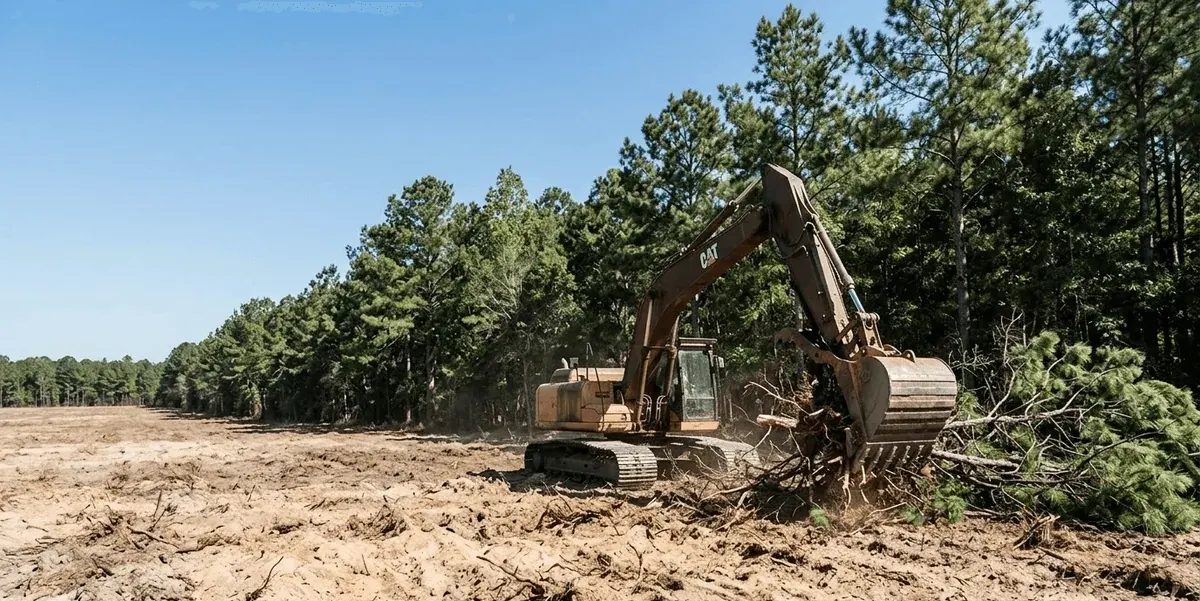
Land Clearing
Full-acreage clearing — timber removal, debris management, and rough grade preparation for construction, agriculture, or pasture. We carry every job from first cut through cleared finish.
Learn More →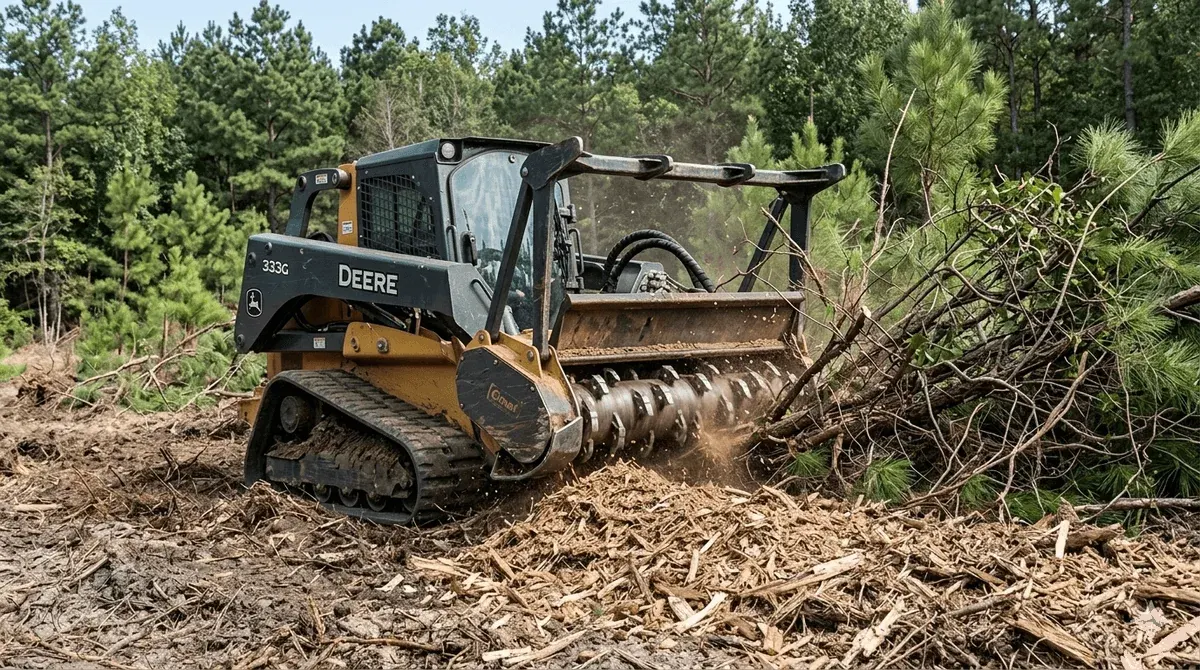
Forestry Mulching
Single-pass mulching — grinds trees and brush into ground-level mulch with no debris piles, no burn permits, and minimal soil disturbance. Well-suited to the local coastal pine and hardwood stands.
Learn More →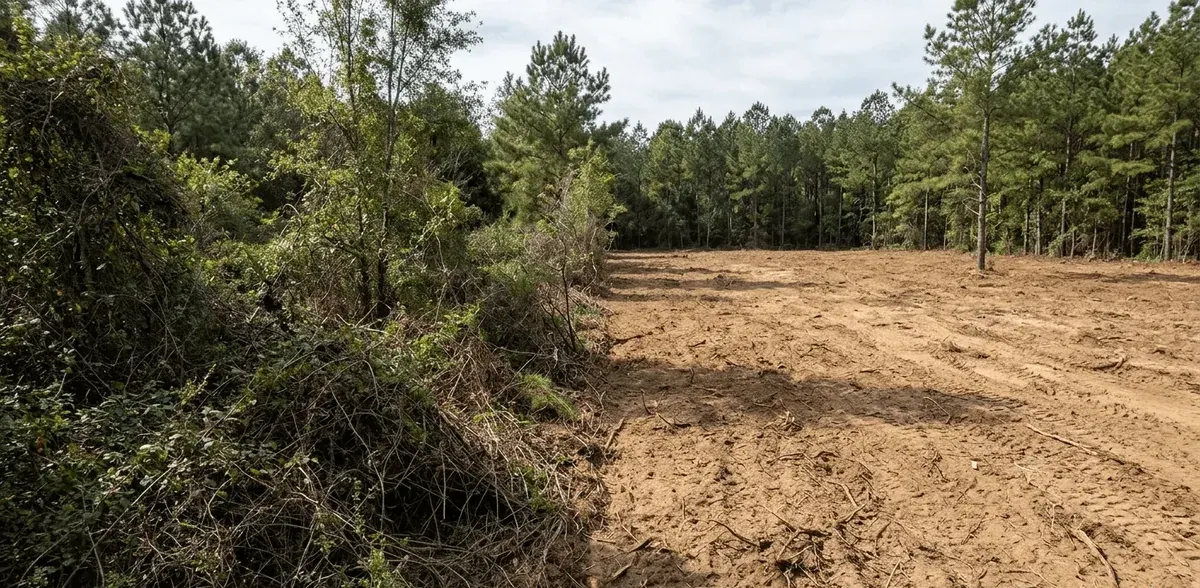
Brush Clearing
Overgrown lots, fencerows, pastures, and understory — brush clearing using tracked equipment suited to the region's dense vegetation. From reclaiming a neglected fence line to opening several acres of scrub.
Learn More →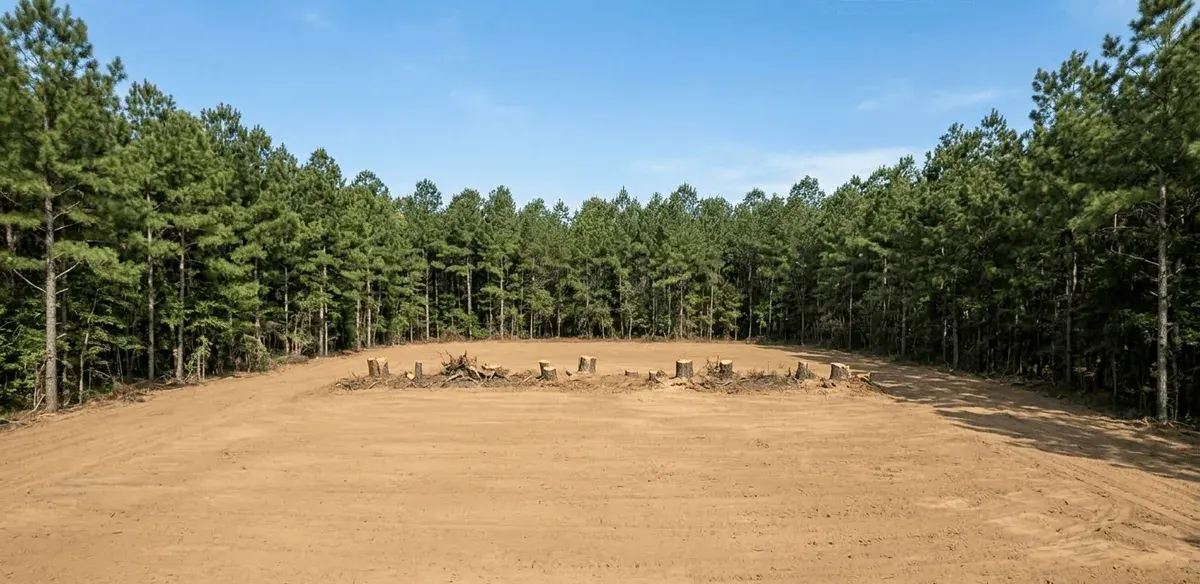
Lot Clearing
Clearing for new home construction, outbuildings, and driveways — debris removed, finish grade prepared, ready for the next phase. Build-ready lots delivered clean.
Learn More →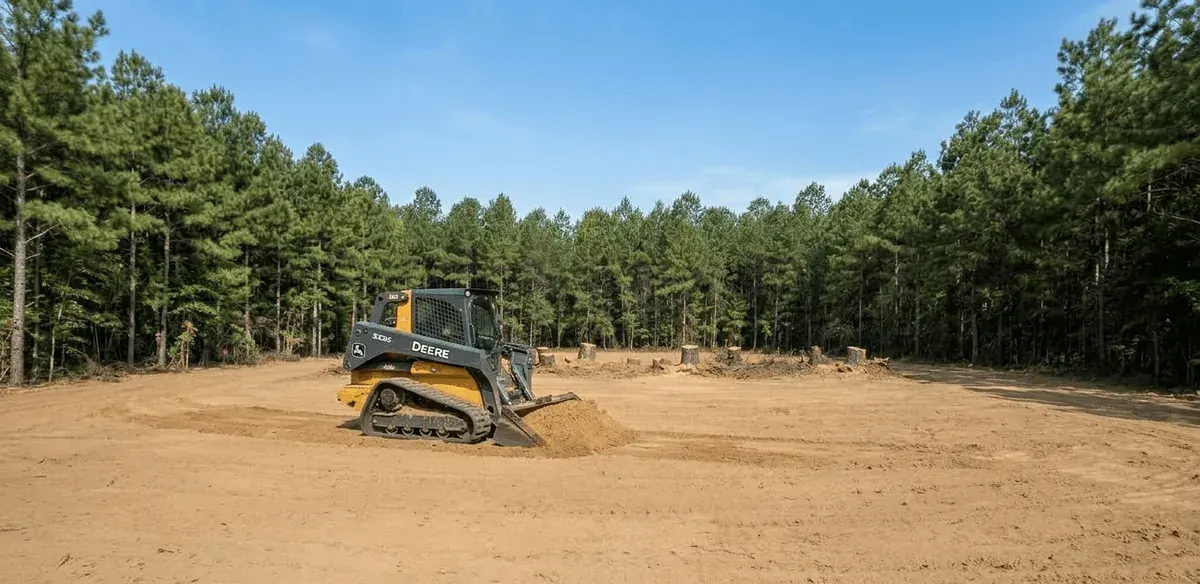
Site Preparation
Prepping for new construction, septic installation, or driveway access — we prep the site to spec. Sandy loam soil common to the area is graded and stabilized for the foundation type you're building.
Learn More →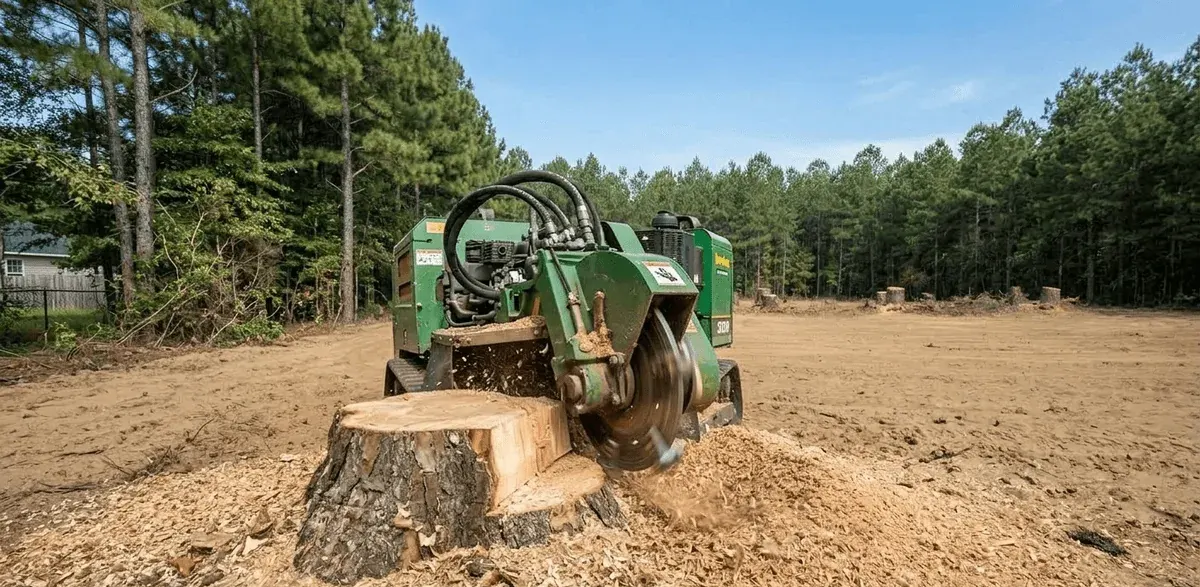
Stump Removal
Stump grinding for individual stumps after storm damage or partial clearing, and full stump removal on lots where the clearing phase is complete. Construction and septic installation typically require stumps fully removed before grading.
Learn More →From overgrown to ready-to-use — here's how we work
Site Assessment
We walk the property — vegetation density, terrain, access, desired finish grade — before quoting a price.
Method Selection
Mulching, traditional clearing, or a combination — matched to your terrain, soil, and how the land will be used.
Clearing & Grading
Equipment staged and sequenced for the job. Debris managed on-site or hauled — no mess left behind.
Final Walkthrough
We walk the cleared property with you before closing the job. Site ready for the next phase.
Services Offered
Assessments
Available
Land Clearing Crew
Local ground, local crew — we clear to the conditions here
Sandy Coastal Plain Terrain
The region's sandy loam doesn't compact like middle Georgia red clay. We adjust our equipment and grading approach for southeast Georgia's coastal plain profile.
Heavy Timber & Pine Stands
The area carries significant pine and mixed hardwood acreage. We clear large timber efficiently — mulching, hauling, or burning where permitted — without leaving buried debris.
Site-Assessed Before Priced
Every job is different. We assess your property in person before quoting — no guessing on acreage, slope, or access that would drive the price up after the fact.
Ready to get that property cleared? Here's what you can expect.
- Free on-site property assessment
- Quote before any equipment is dispatched
- Debris hauled, mulched, or burned per your preference
- EPD Southeast District permit guidance available
- Coordination with septic and well contractors on new builds
- No job too remote in the area
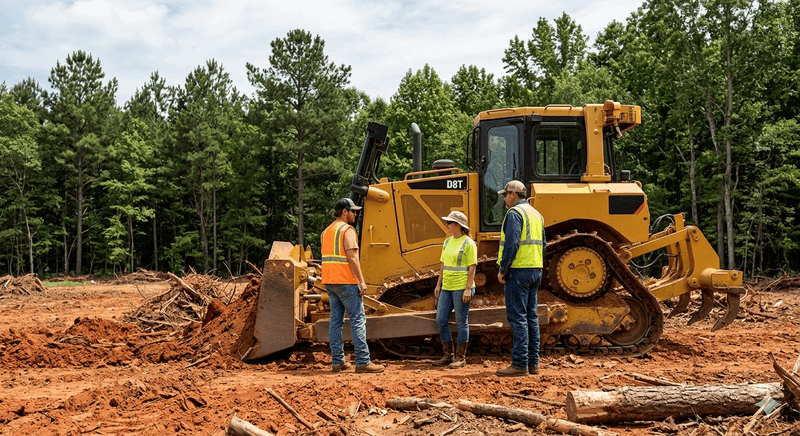
Common questions about clearing land in southeast Georgia
Straight answers about pricing, permits, soil, and what to expect when you clear property in this region.
How much does land clearing cost in Georgia?
In Wayne County, Georgia, land clearing typically costs $1,500–$5,000 per acre depending on vegetation density, timber size, and whether stump removal is included. Light brush or overgrown grass runs $500–$1,500 per acre. Mixed brush and small trees average $1,500–$3,500 per acre. Heavily wooded land with mature pine or hardwood timber ranges from $3,500–$6,000 or more per acre. Southeast Georgia's sandy loam soil generally allows equipment to move efficiently, but dense coastal pine stands and palmetto understory add time and cost. These are typical market ranges — your property's acreage, access, and desired finish grade all affect the final quote.
Do I need a permit to clear land in Georgia?
In Georgia, land disturbance that disturbs more than one acre typically requires a Land Disturbance Permit (LDP) from your county and an NPDES General Permit from the Georgia EPD. Wayne County falls under the EPD Southeast District. Projects under one acre generally do not require a state permit, but local ordinances may apply. An erosion and sediment control plan is often required for permitted projects. Forestry mulching can reduce sediment risk because it leaves organic material in place rather than exposing bare soil.
Does land clearing include stump removal?
In Wayne County, Georgia, stump removal is typically quoted separately from land clearing. When trees are felled and removed, stumps remain unless grinding or full stump removal is specifically included in the scope. For properties where construction, grading, or farming will follow, stump removal is typically necessary. Jesup Land Clear can include stump grinding as part of a full clearing package or as a standalone service for lots where only stumps remain.
How long does it take to clear an acre of land?
Clearing one acre of lightly overgrown land typically takes 4–8 hours with the right equipment. Heavily wooded acreage with mature pine or hardwood — common in southeast Georgia's timber belt — can take 1–2 full days per acre. Factors that extend timeline include terrain slope, access road width, debris disposal method, and whether stump removal is included. Forestry mulching is often faster than traditional clearing on dense wooded lots because it handles cutting and processing in a single pass.
What is the best method for clearing wooded land?
The best method depends on the property's intended use. Forestry mulching is well-suited for the region's coastal plain pine and hardwood stands — it grinds trees and brush into ground-level organic material in a single pass, eliminates debris piles, and avoids burn permits. Traditional clearing with excavator or bulldozer is preferred when site grading and soil removal are required — for new construction foundations, septic drain fields, or major grade changes. Many local projects use a combination: mulch the understory and smaller trees, then use an excavator for large stumps and final grade work.
What is forestry mulching and how does it work?
Forestry mulching uses a tracked machine with a high-speed rotating drum fitted with carbide teeth to shred trees, brush, and stumps directly into ground-level mulch. The machine drives through vegetation, processing everything in a single pass — no separate felling, piling, or burning required. The resulting mulch layer suppresses weeds, reduces erosion, and gradually decomposes into the soil. It is particularly effective in coastal plain terrain where sandy loam soil benefits from the added organic layer and where burn permits for debris piles are an avoidable hassle.
Can land clearing cause soil erosion?
Yes — land clearing removes the vegetation root system and canopy that hold soil in place, leaving bare ground exposed to rain and runoff. In southeast Georgia, sandy loam soil erodes more quickly than heavier soils when unprotected. Georgia EPD requires erosion and sediment control measures on permitted land disturbance projects. After clearing, stabilization measures such as seeding, erosion control matting, or gravel cover are recommended before rain events — especially on sloped ground near drainage ways or creek buffers.
How much does forestry mulching cost per acre?
Forestry mulching typically costs $150–$400 per hour, or $1,000–$3,500 per acre depending on vegetation density and machine access. Light brush and small trees are processed faster and cost less per acre. Dense coastal pine or overgrown timber land with heavy understory takes longer and increases per-acre cost. Forestry mulching eliminates the need for separate debris haul-off and burn permits, which often offsets its higher equipment rate compared to simple brush hogging.
When is the best time to clear land in Georgia?
Late fall through early spring — October through March — is generally the best time to clear land in southeast Georgia. Cooler temperatures reduce equipment heat stress, the ground is firmer after summer rains ease, and deciduous vegetation is dormant, making it easier to assess what is being cleared. Spring and summer clearing is fully workable but Georgia's rainy season can create access and erosion challenges. Avoid clearing immediately before forecasted heavy rain events to reduce erosion risk on exposed soil.
Does clearing land increase property value?
Generally yes — cleared land is more marketable and developable than wooded or overgrown parcels. Cleared land is ready for construction, farming, or recreational use immediately. Buyers and developers pay a premium for build-ready lots compared to raw wooded land requiring additional clearing investment. The value increase depends on the intended use: a cleared lot with proper grading and utility access adds the most value, while simply clearing brush without addressing drainage or grade adds less.
How do I clear heavily wooded land?
Heavily wooded land — mature pine stands, hardwood with dense palmetto and gallberry understory — requires professional equipment. The typical process starts with a site assessment to identify the best access point, equipment match, and debris handling plan. Large timber is felled and processed first, followed by understory clearing. Stumps are ground or pulled depending on what follows. Forestry mulching handles mid-size timber and dense brush efficiently in southeast Georgia's coastal terrain. DIY clearing with chainsaws is practical only for very small areas — anything over a quarter acre with standing timber warrants a professional quote.
What is the difference between land clearing and grubbing?
Land clearing removes above-ground vegetation — trees, brush, and debris. Grubbing removes below-ground material — roots, stumps, and buried organic matter. Clearing and grubbing together prepare a site suitable for construction foundations, septic drain fields, or road base work. Clearing alone is sufficient for agricultural use or pasture reclamation. Construction and septic installation typically require clearing AND grubbing to ensure the root system and organic layer are fully removed before grading and compaction.
How much does it cost to clear a lot for a house?
Clearing a residential lot for new home construction typically costs $2,000–$8,000 depending on lot size, timber density, and whether site grading and stump removal are included. A lightly wooded half-acre lot might run $1,500–$3,000. A densely wooded acre with mature pine and hardwood, requiring full stump removal and rough grading, can reach $5,000–$8,000 or more. Site preparation for construction — including finish grading — is typically quoted separately and adds $500–$2,000 depending on slope and scope.
What happens to trees and debris after land clearing?
Debris handling depends on the clearing method and scope agreed in the quote. Traditional clearing produces cut timber and brush piles that are either chipped on-site, hauled to a disposal facility, burned under a Georgia open burning permit, or left for the property owner to manage. Forestry mulching grinds everything into ground-level mulch — no piles, no haul-off required. Jesup Land Clear handles debris as part of the clearing scope — your cleared property will not have piles left behind unless that is specifically agreed upon as a cost-saving option.
Is burning cleared debris legal in Georgia?
Open burning of land clearing debris is legal in Georgia under certain conditions. Georgia EPD issues open burning permits, and Wayne County falls under the EPD Southeast District's regulations. Burning is typically restricted by air quality forecasts — you must check with EPD before igniting. Burning is prohibited during air quality action days and in areas where local ordinances restrict open burning. Forestry mulching eliminates the need for burn permits entirely by processing debris on-site into mulch — this is one reason many property owners prefer it for wooded lots.
How do I prepare land for construction after clearing?
After land clearing, construction site preparation typically involves stump removal and grubbing if not already done, rough grading to establish drainage slope, soil compaction testing if required by your builder or permit, and utility marking before any excavation. Sandy loam soil common in southeast Georgia compacts differently than middle Georgia red clay — your builder or contractor may specify a particular subgrade preparation for your foundation type. Jesup Land Clear can carry the project from clearing through rough grade, leaving the site ready for foundation work, driveway installation, or septic system placement.
What should I ask a land clearing contractor before hiring?
Before hiring a land clearing contractor, ask:
- What clearing method do you recommend for my property and why?
- What is included in debris handling — mulch on-site, haul-off, or pile?
- Does your quote include stump removal or is that separate?
- Will you handle any required Georgia EPD erosion control measures?
- What does the finished site look like — rough grade, specific elevation, or flat pass only?
- How do you handle access to the clearing area?
Getting clear answers to these questions up front avoids surprises and ensures the cleared property is in the condition you need for the next phase of your project.
Do I need to clear land before drilling a well?
Well drilling typically requires a clear access path for the drill rig — usually a 10–15 foot wide corridor from the road or driveway to the drill site, plus a working area of roughly 20×30 feet around the wellhead location. On wooded rural properties, this means at minimum partial clearing before the drilling crew can mobilize equipment. Full lot clearing is not required — only the access route and well pad area need to be cleared. If your property also needs site clearing for construction, coordinating the clearing work first saves mobilization cost and avoids scheduling conflicts. Jesup Well Drilling serves the area and can advise on site requirements for residential well installation.
Do I need to clear land before installing a septic system?
Septic system installation requires a clear drain field area — the size depends on soil percolation test results and the system type, but residential systems typically need 5,000–10,000+ square feet of cleared, unobstructed soil. Trees and large roots in or near the drain field cause long-term system problems and are typically required to be removed before installation. The tank access route also needs equipment clearance. On wooded lots, clearing for the drain field and tank area is almost always a necessary first step before the septic contractor can begin work. Jesup Septic handles septic installation and can confirm exact clearing requirements for your site.
What is the difference between forestry mulching and land clearing?
Forestry mulching is one method of land clearing — not a separate service. Traditional land clearing uses a combination of equipment (excavators, bulldozers, skid steers) to fell, pile, and haul away or burn vegetation and debris. Forestry mulching uses a single machine with a rotating drum to grind trees, brush, and understory directly into the ground in one pass — no piles, no haul-off, no burn permits. In this region, forestry mulching is well suited for properties where the goal is vegetation removal with minimal soil disruption: pasture reclamation, recreational land, utility corridors, or lots where construction won't require major grade changes. Traditional clearing is better when deep root removal, significant grading, or construction-ready subbase work is required.
How do I find land clearing services near me in the Jesup area?
Jesup Land Clear provides all six clearing services throughout the county — serving Jesup, Odum, Screven, Gardi, and surrounding rural communities. Request a free property assessment through the quote form on this page. Describe your property, acreage, and what you need cleared, and we follow up with a site visit and detailed quote. No phone calls required — all communication goes through the form or use the contact form on this page.
New construction on cleared land typically requires a septic system — Jesup Septic handles septic installation and pumping throughout the area. New property development often requires a well along with site clearing — Jesup Well Drilling drills residential wells locally. Once your land is cleared and graded, driveway and road base work often follows — Jesup Gravel supplies and delivers gravel in the region.
Serving property owners across Wayne County and beyond
We serve Jesup, Odum, Screven, Gardi, and all of Wayne County — plus surrounding communities throughout southeast Georgia.
All of Wayne County, Georgia — free land clearing assessments available throughout our service area.
For local government resources and permit information, visit the Wayne County official website or the City of Jesup.
Tell us about your property — we'll quote it before we touch it
Describe your property and what you need cleared. We'll follow up with a site visit and a detailed quote — no obligation, no pressure.
Or email us directly: Email Us